Source Folding Food Transport Refrigerated Tricycle for Delivery
Compare 30 folding food transport refrigerated tricycle options from verified suppliers. Buyers can evaluate specifications like cargo box size, cooling methods, and load capacity to find the right vehicle for urban delivery, market vending, or cold chain logistics; compare the available evidence and request quotations based on your requirements.
Key considerations
Products List


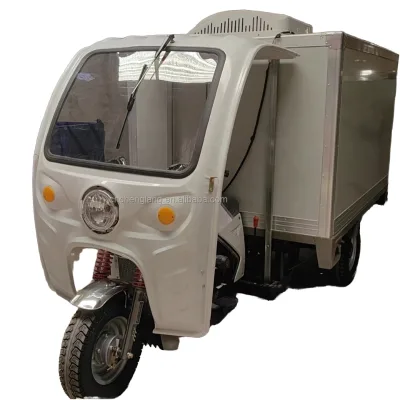
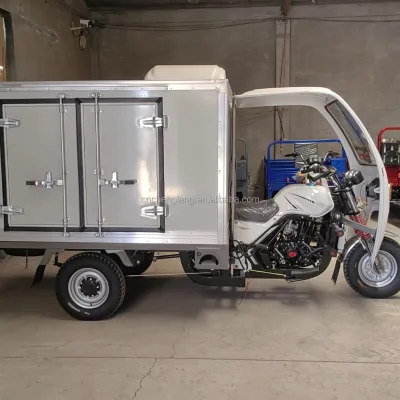
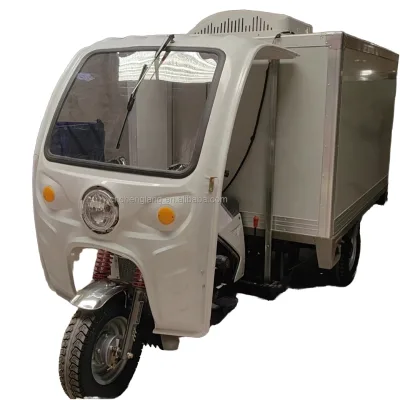
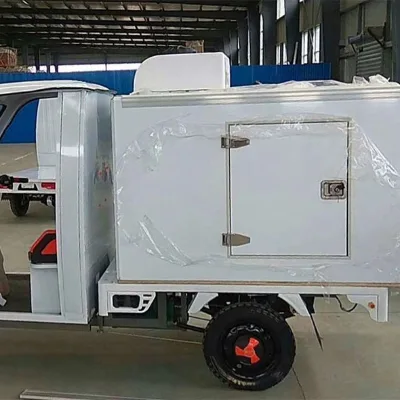


Comprehensive Sourcing Guide
Folding Food Transport Refrigerated Tricycle Sourcing Guide
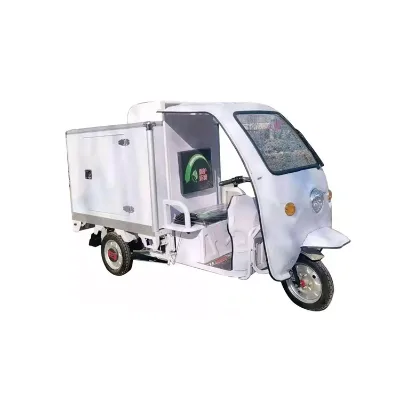
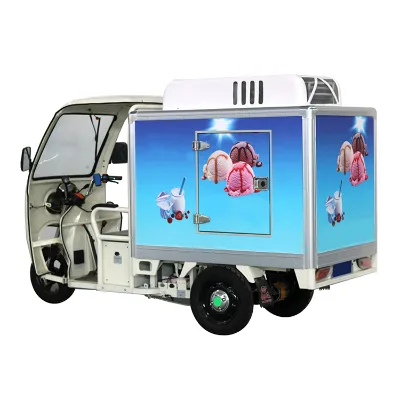
The market for folding food transport refrigerated tricycles presents a complex landscape where specific configurations like the C-M-180 Refrigerated Tricycle coexist with general cargo variants. Buyers must distinguish between units designed for closed-body refrigeration and those offering open flatbed styles, as the structural integrity required for temperature-controlled logistics differs significantly from standard cargo hauling. Observations indicate that while some listings specify a 1.8x1.3m rear box, others offer dimensions up to 2x1.3m, requiring precise verification of the cargo volume needed for your specific food distribution routes.
Procurement decisions should prioritize the distinction between electric and gasoline-powered models, as the observed data shows conflicting fuel attributes ranging from electric to gasoline and diesel options. This variance impacts the operational cost structure and regulatory compliance requirements in your target market. A folding mechanism, while implied by the product scope, must be explicitly confirmed against the listed body types, which include both closed and open configurations, to ensure the unit meets the spatial constraints of your urban delivery fleet.
Product Scope and Observed Listing Signals
Buyers should scrutinize the listed product models, such as the DY0006, to understand the baseline engineering standards before requesting custom modifications. The observed data reveals a wide range of engine sizes, with some units specified as under 250cc while others list horsepower between 150-250hp, creating a potential confusion point for specification matching. It is critical to verify whether the "folding" capability applies to the cargo box or the entire chassis, as the standard packing methods listed include CKD, SKD, and CBU options that affect how the unit arrives and is assembled on-site.
The physical dimensions and load capacities observed in listings vary from a maximum load of 500kg to general cargo capacities of 1-10t, necessitating a clear definition of your payload requirements. While some units feature solid tires and a wheel distance of 1075mm, others may have different tire sizes like 5.5x13, which directly influences stability and terrain adaptability. Procurement teams must align these observed physical attributes with the specific weight of the food products and the refrigeration unit to avoid overloading the chassis or compromising the cooling efficiency during transit.
Technical Specifications to Verify
Engine type and transmission configuration are primary verification points, as the data indicates a mix of 4-stroke engines with both manual and automatic transmission types. Buyers must confirm the cooling method, as water cooling is listed alongside other potential systems, which is vital for maintaining engine performance in stop-and-go urban environments typical of food delivery. The power source, whether electric with a lithium-ion battery or gasoline, dictates the range and refueling infrastructure required, making it essential to match the vehicle's power output to the daily mileage and payload demands of your operation.
Refrigeration capabilities and cargo box dimensions require rigorous validation against the observed standards, such as the 1410x915x930mm cargo box size or the 3000x1320x1720mm standard dimensions. The seating configuration is typically listed as a single seat, which limits the vehicle to a driver-only operation, a factor that must be accounted for in your staffing and logistics planning. Additionally, the braking mode, often described as front and rear hub systems, must be inspected to ensure it meets the safety standards required for heavy food loads, especially when navigating steep inclines or wet conditions.
Compliance and Safety Documentation
Certification verification is paramount, as the observed listings include a diverse array of marks such as CCC, ISO 9001:2008 SGS, EPA, DOT, CE, and E Mark. Buyers must ensure that the specific unit they purchase carries the certifications required for their local jurisdiction, as the presence of one certification does not guarantee compliance with another. The ISO 9001 standard is frequently cited, but the specific version and the scope of the certification, such as whether it covers the refrigeration unit or just the chassis, must be confirmed through the supplier's quality manual.
Safety documentation should explicitly cover the braking systems and tire certifications, particularly the E Mark for tires, which indicates compliance with European safety standards. The listed condition is consistently new, but buyers should request test results or inspection reports that verify the structural integrity of the folding mechanism and the reliability of the refrigeration unit under load. Without these specific documents, the risk of non-compliance with local traffic safety laws or food safety regulations increases significantly, potentially leading to operational delays or legal penalties.
Cost Drivers and Commercial Terms
Pricing structures in this category show a wide observed range from 800 to 3240 USD, driven largely by the complexity of the refrigeration system and the engine type. Buyers should anticipate that units with automatic transmissions and advanced cooling systems will command higher prices compared to basic manual models with simple cargo boxes. The cost of customization, which is listed as available, will also be a significant variable, as modifying the body type from open to closed or adjusting the rear box dimensions incurs additional engineering and manufacturing expenses.
Minimum Order Quantities (MOQ) vary between 1 and 45 units, influencing the unit economics and the feasibility of small-scale pilot programs. For buyers requiring fewer than the standard MOQ, the per-unit cost may increase due to setup fees or the need to consolidate orders with other clients. Payment terms and lead times are not explicitly detailed in the observed data, so procurement teams must negotiate these commercial terms early to align with their inventory planning and cash flow requirements, ensuring that the delivery schedule matches the seasonal demand for food transport.
Supplier Qualification and Quality Control
Supplier qualification should focus on the origin of the product, with Chongqing, China, being a primary hub for these manufacturing operations. Buyers must verify the supplier's capacity to handle the specific packing requirements, such as iron frames and cartons, to prevent damage during transit. The presence of multiple certifications like CCC and ISO 9001 suggests a baseline level of quality management, but buyers should request evidence of recent production audits to ensure that the specific batch of refrigerated tricycles meets the agreed-upon specifications.
Quality control processes must extend beyond the final assembly to include the integration of the refrigeration unit and the folding mechanism. Since the product attributes list various body types and engine configurations, the supplier must demonstrate a robust testing protocol for each unique configuration to ensure consistency. Buyers should insist on a pre-shipment inspection that verifies the load capacity, braking performance, and cooling efficiency, as these are critical factors that cannot be easily corrected once the vehicle is deployed in the field.
Long-Term Procurement Checks
Sustainability and maintenance planning are essential for the long-term viability of the fleet, particularly regarding the battery life of electric models or the fuel efficiency of gasoline units. Buyers should establish a maintenance schedule that accounts for the wear and tear on the folding mechanism and the refrigeration compressor, which are high-stress components in daily food transport operations. The observed year range of after 2010 suggests that many units are relatively modern, but the availability of spare parts for specific models like the C-M-180 must be confirmed to avoid prolonged downtime.
Future scalability requires a clear understanding of the supplier's ability to support fleet expansion and provide consistent quality across different production batches. Buyers should negotiate service level agreements that cover technical support, warranty claims, and the supply of critical spare parts like tires and brake components. Regular performance reviews of the fleet should be conducted to assess whether the initial specifications, such as the 35-40km/h max speed and 315kg weight, continue to meet the evolving needs of the food distribution network.
FAQs
What is the maximum load capacity for this refrigerated tricycle?
The maximum load capacity is 500kg, suitable for medium-duty cargo transport. This specification ensures reliable performance for urban food delivery and small-scale logistics operations. The vehicle is designed to handle substantial weights while maintaining stability and efficiency during daily operations.
Can the cargo box size be customized for specific needs?
Yes, customization is available for the cargo box dimensions. Standard options include a 1.8x1.3m rear box or a 1410x915x930mm enclosed unit. Buyers can request specific sizes to match their operational requirements, ensuring optimal space utilization for various types of goods and transport tasks.
Which certifications are required for international shipping of this model?
The product holds CCC, ISO 9001, CE, EPA, and DOT certifications. These documents facilitate compliance with various regional safety and quality standards. Buyers should verify specific import requirements for their destination country to ensure all necessary regulatory approvals are met before finalizing the purchase order.
What engine specifications are available for the cargo motorcycle?
Engine sizes are typically under 250cc, with options for 201-250cc displacement. The models feature 4-stroke engines and manual or automatic transmission types. These specifications provide a balance of power and fuel efficiency, making them suitable for heavy-duty cargo applications in urban and suburban environments.
How is the vehicle packed for international shipment?
The vehicle is packed using CKD, SKD, or CBU methods. Some models utilize iron frames and cartons for secure transport. This flexible packaging approach minimizes shipping costs and damage risks, allowing buyers to choose the most economical and safe method for their specific logistics chain and destination port.
What is the typical MOQ for ordering this tricycle?
The minimum order quantity ranges from 1 to 45 units. This flexible MOQ allows both small businesses and larger distributors to place orders that fit their budget and inventory needs. Buyers can start with a single unit for testing or order larger batches for immediate deployment.